
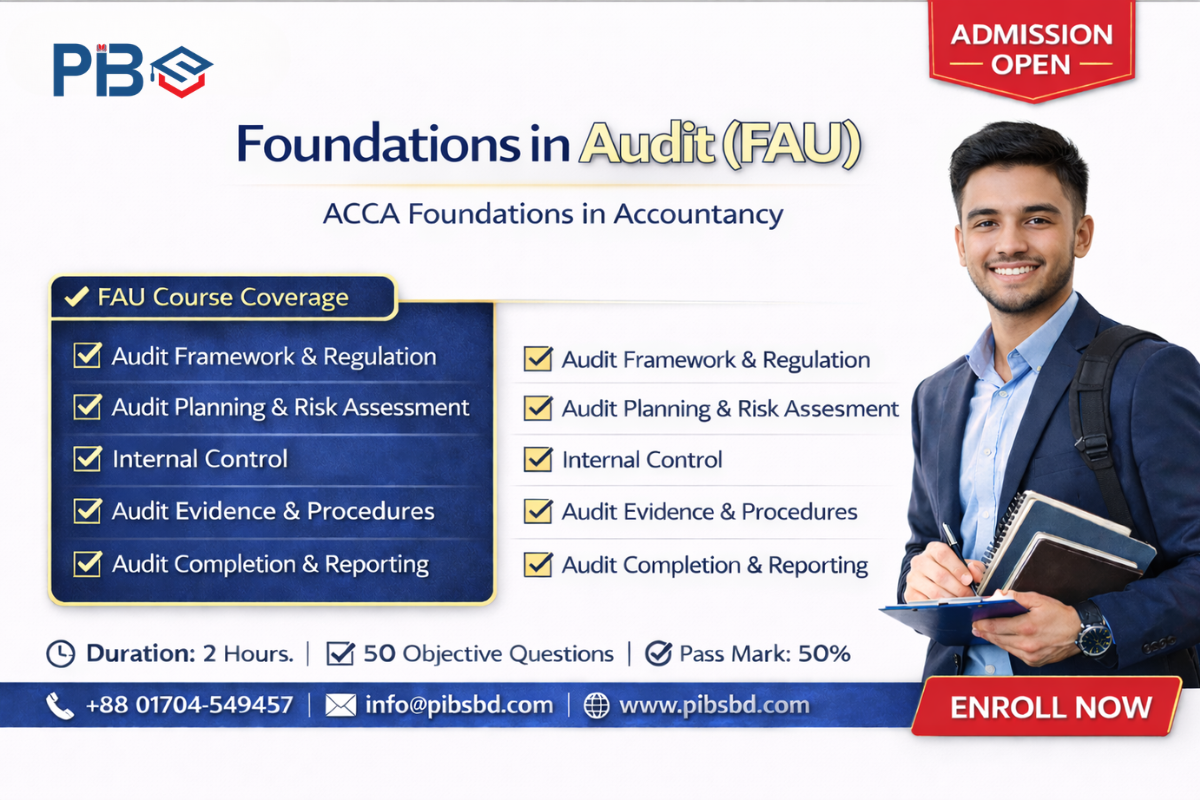
In the ACCA (Association of Chartered Certified Accountants) Foundations in Accountancy suite, FAU (Foundations in Audit) provides an introduction to the nature and purpose of external audits and the audit process.
FAU Syllabus Overview
The syllabus is designed to build technical proficiency in auditing financial statements through five core areas:
- Audit Framework & Regulation: The nature and purpose of an audit, auditor responsibilities, professional ethics (integrity, objectivity), and the regulatory framework governing auditors.
- Audit Planning & Risk Assessment: Understanding the entity, assessing audit risk (inherent, control, and detection risk), and developing an audit strategy and plan.
- Internal Control: Principles of internal control systems, evaluating accounting systems, and communicating control deficiencies to management.
- Audit Evidence & Procedures: Mastering audit assertions and gathering sufficient appropriate evidence through substantive procedures (e.g., for receivables, inventory, and cash) and automated tools/techniques (ATTs).
- Audit Completion & Reporting: Performing final reviews, including going concern and subsequent events, and understanding the form and content of the Independent Auditor’s Report.
Key Learning Outcomes
By the end of this module, you should be able to:
- Explain the purpose and scope of an audit and its regulatory requirements.
- Describe how an auditor plans an audit and identifies material risks.
- Evaluate internal controls and identify potential weaknesses in an accounting system.
- Apply International Standards on Auditing (ISAs) to perform specific audit procedures.
- Differentiate between various types of audit opinions (unmodified vs. modified).
- Demonstrate digital skills relevant to modern auditing, such as managing data in digital formats.
Exam Format
- Duration: 2 hours.
- Structure: 50 objective test questions (2 marks each)
- Pass Mark: 50%