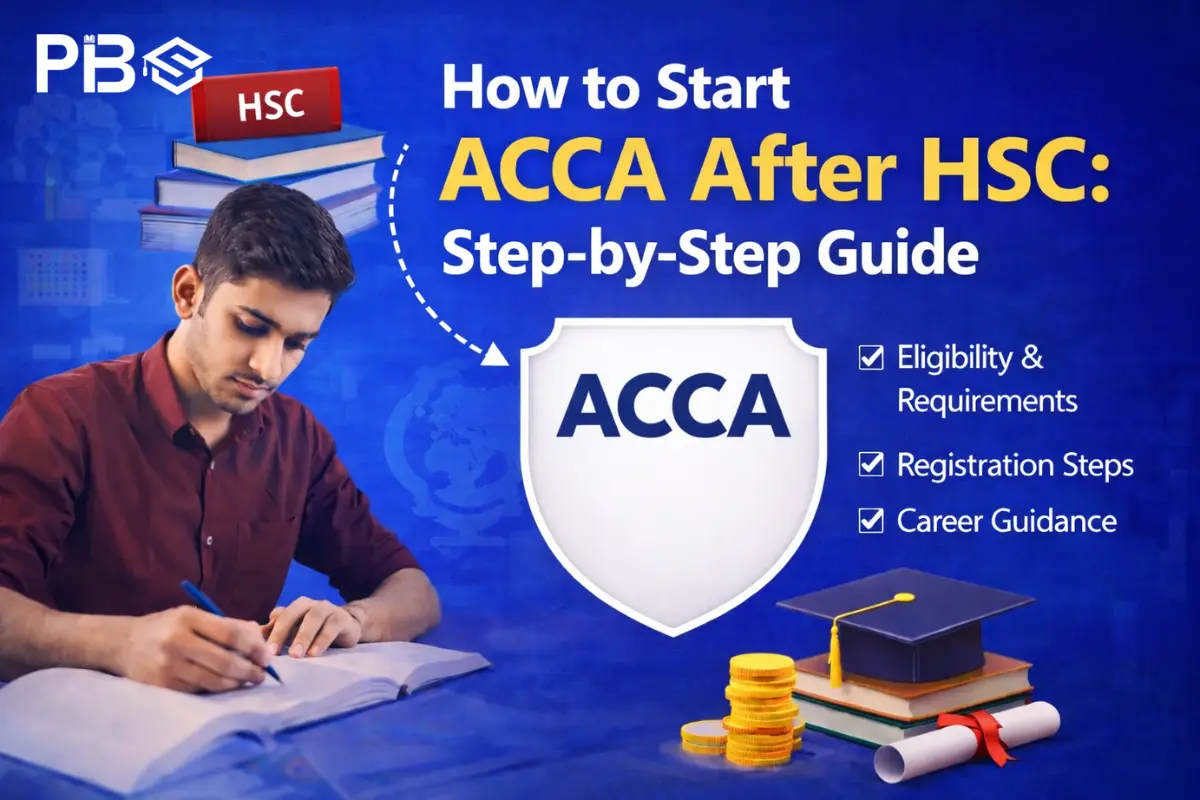
Many students become interested in ACCA after completing HSC because it offers a direct pathway into the world of accounting, finance, and global business. Compared to traditional degree programs, ACCA provides specialized professional skills, international recognition, and stronger career opportunities.
If you are planning to study ACCA after HSC, understanding the right process can help you make a smarter career decision and avoid confusion.
Why Start ACCA After HSC?
Starting ACCA after HSC gives students an early advantage. Instead of waiting until graduation, students can begin building professional accounting knowledge immediately.
Benefits of starting ACCA after HSC include:
- Early entry into finance career pathways
- Global recognition
- Higher salary potential
- Flexible study options
- Faster professional growth
Students who begin ACCA early often complete the qualification before many of their peers finish traditional university degrees.
Step 1: Check ACCA Eligibility After HSC
The first step is to confirm whether you meet the eligibility criteria.
To start ACCA after HSC, students usually need:
- HSC / A Level qualification
- Commerce background preferred but not mandatory
- Basic English and mathematics skills
Students from science or arts backgrounds can also start ACCA if they meet the minimum academic requirements.
Step 2: Understand the ACCA Course Structure
Before starting ACCA after HSC, students should understand the full ACCA Subjects List so they can plan their study journey properly.
The ACCA qualification has three levels:
- Applied Knowledge
- Applied Skills
- Strategic Professional
Each level helps students gradually build technical accounting and finance knowledge.
Step 3: Register with ACCA Global
The next step is to complete registration through the official ACCA website.
During registration, students need to submit:
- Academic certificates
- Passport-size photograph
- National ID or passport copy
- Registration fee
Once registration is approved, students can begin preparing for exams.
Step 4: Choose the Right ACCA Institute
Selecting the right institute is one of the most important decisions for ACCA students.
If you are confused about where to study ACCA, check our Best ACCA Institute in Bangladesh guide for important factors like faculty, revision support, and class schedules.
A good ACCA institute should provide:
- Experienced faculty
- Structured class schedules
- Career guidance
- Mock exams and study support
- Flexible learning options
Students often choose professional institutes like PIBS because of their strong faculty support, career mentoring, and practical learning environment.
Step 5: Plan Your Exam Strategy
One common mistake students make is trying to complete too many papers at once.
The best strategy is to:
- Start with fewer papers
- Build confidence gradually
- Focus on understanding concepts
- Maintain consistent study habits
A smart exam strategy improves pass rates and reduces pressure.
Step 6: Build Communication and Technical Skills
ACCA is not only about passing exams. Students also need strong communication, analytical, and technology skills.
Important skills include:
- English communication
- Excel and financial software
- Presentation skills
- Time management
- Problem solving
These skills improve employability and prepare students for future job opportunities.
Step 7: Gain Practical Experience
Students should start gaining work experience as early as possible.
Practical experience can include:
- Internships
- Part-time jobs
- Training programs
- Freelance accounting work
This experience helps students apply classroom knowledge to real business situations.
Common Challenges Students Face
Students who start ACCA after HSC may face some challenges in the beginning, such as:
- Understanding technical subjects
- Managing time
- Adapting to professional-level exams
- Balancing studies with other commitments
However, with the right guidance and consistent effort, these challenges become easier to manage.
Why ACCA is a Smart Career Choice After HSC
Students often compare ACCA with traditional degrees like BBA or CA. ACCA stands out because it offers:
- International recognition
- Better salary potential
- Flexible study structure
- Faster career growth
- Strong demand in multinational companies
This makes ACCA one of the best professional qualifications for students who want a future in accounting and finance.
Why Students Choose PIBS for ACCA After HSC
Many students prefer PIBS because it offers:
- Experienced ACCA faculty
- Student-friendly learning support
- Practical career guidance
- Flexible class options
- Strong reputation in professional education
Choosing the right institute can make the ACCA journey easier and more successful.
Conclusion
Understanding how to start ACCA after HSC can help students make better decisions about their future. Starting early allows students to build professional skills, gain practical experience, and create a strong foundation for long-term career growth.
With the right study plan, institute, and career guidance, ACCA can become one of the most valuable qualifications for ambitious students.