
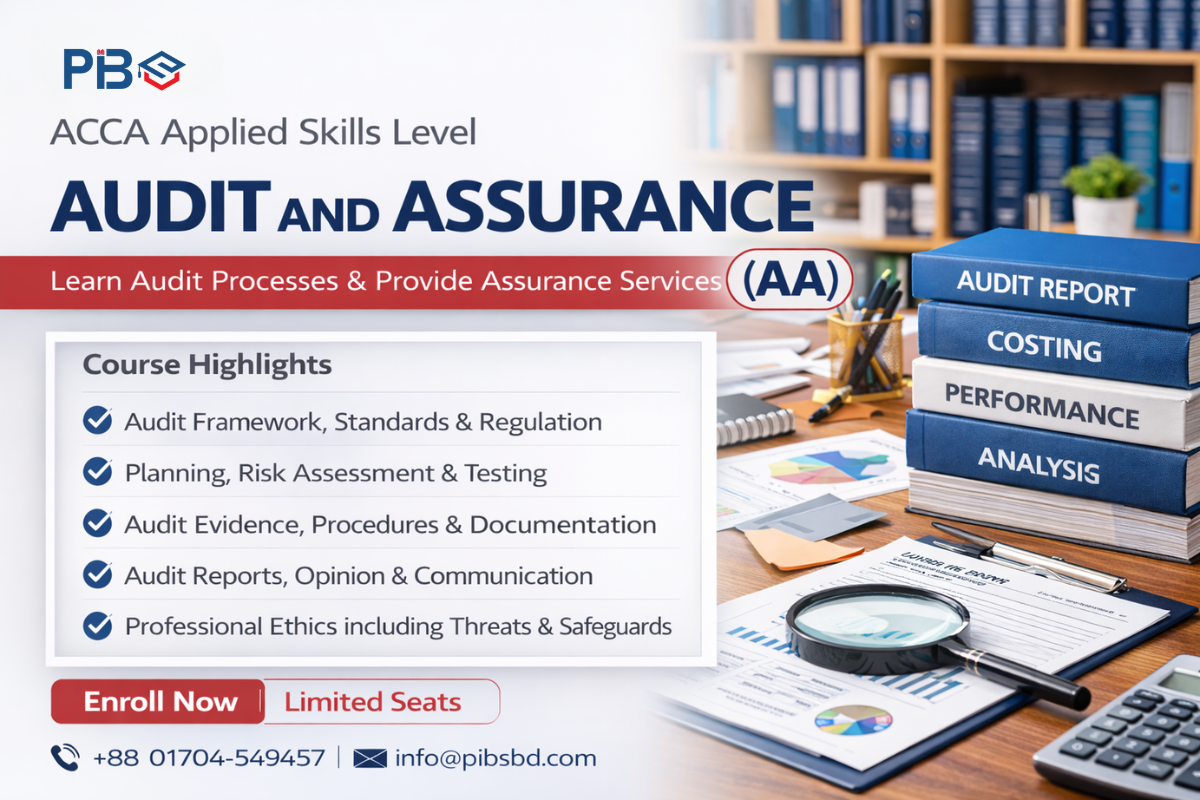
In the ACCA Applied Skills level, AA (Audit and Assurance) focuses on the process of carrying out an assurance engagement and the application of International Standards on Auditing (ISAs).
AA Syllabus Overview
The syllabus is structured into five core areas:
- Audit Framework and Regulation: Covers the concept of assurance, external audits, corporate governance, and professional ethics (including the IESBA Code).
- Planning and Risk Assessment: Focuses on understanding the entity, identifying audit risks (inherent, control, and detection), and materiality.
- Internal Control: Evaluating internal control systems, identifying weaknesses, and communicating recommendations to management.
- Audit Evidence: Designing and performing substantive procedures (e.g., for non-current assets, inventory, and receivables) and using Audit Data Analytics (ADAs).
- Review and Reporting: Procedures for subsequent events and going concern, and the formation of the Auditor’s Report.
Key Learning Outcomes
By the end of the course, you should be able to:
- Explain the legal and regulatory framework and its impact on the audit process.
- Identify and assess the risk of material misstatement in a financial statement audit.
- Appraise the effectiveness of internal controls and recommend improvements.
- Describe the appropriate audit evidence and procedures required to achieve audit objectives.
- Draft various types of audit reports based on the findings of the audit.
Exam Format
The AA exam is a 3-hour computer-based exam (CBE):
- Section A (30 marks): 3 case-based scenarios, each with 5 objective test questions (2 marks each).
- Section B (70 marks): 3 constructed response questions. One is worth 30 marks (typically on Internal Control or Audit Procedures), and two are worth 20 marks each (covering Audit Risk and Reporting/Review).