
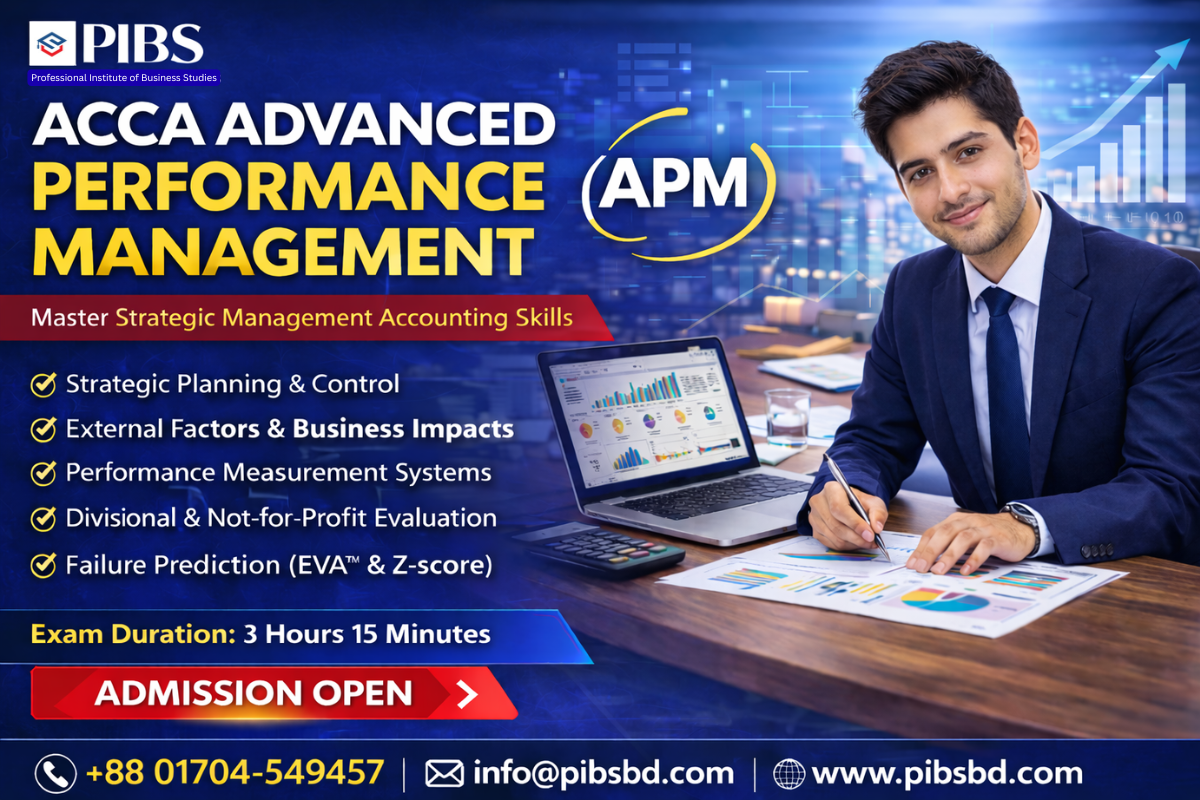
In the ACCA Strategic Professional level, APM (Advanced Performance Management)—formerly P5—is an optional paper that builds on PM. It focuses on using strategic management accounting to evaluate and improve organizational performance in various business contexts.
APM Syllabus Overview
The curriculum is divided into five core areas:
- Strategic Planning and Control: Understanding the strategic role of management accounting and how planning and control systems should be designed to support business strategy.
- Impact of External Factors: Evaluating how the macroeconomic environment, competition, and the regulatory environment affect organizational performance.
- Performance Measurement Systems: Designing and evaluating systems using models like the Balanced Scorecard, Building Block Model, and the Performance Pyramid.
- Strategic Performance Measurement: Analyzing performance in divisionalized businesses and not-for-profit organizations, including the use of Economic Value Added (EVA™) and Transfer Pricing.
- Performance Evaluation and Corporate Failure: Assessing the effectiveness of performance reports and identifying early warning signs of corporate failure using models like the Altman Z-score.
Key Learning Outcomes
By the end of the course, you should be able to:
- Advise on the strategic role of performance management in achieving organizational goals.
- Evaluate the impact of external environment changes on performance.
- Design and justify appropriate performance measurement systems for different entities.
- Critically appraise the use of financial and non-financial indicators.
- Identify and recommend solutions for organizations facing performance issues or potential failure.
Exam Format
The APM exam is a 3-hour 15-minute computer-based exam:
- Section A (50 marks): One large compulsory case study (typically worth 40 technical marks and 10 professional marks).
- Section B (50 marks): Two compulsory 25-mark questions, each containing 20 technical marks and 5 professional marks.
- Professional Marks: Awarded for demonstrating Communication, Analysis and Evaluation, Scepticism, and Commercial Acumen