
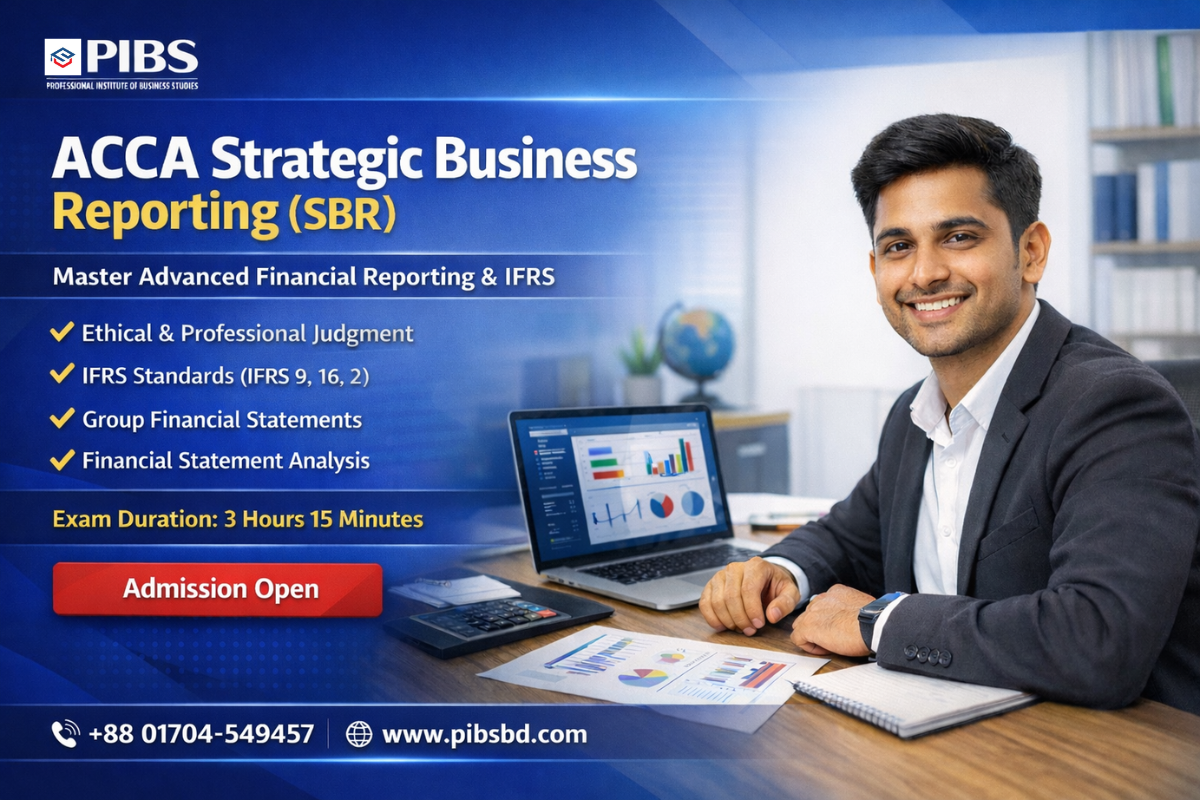
In the ACCA Strategic Professional level, SBR (Strategic Business Reporting) moves beyond mere preparation to the critical evaluation and interpretation of financial reporting in various contexts.
SBR Syllabus Overview
The syllabus is designed to reflect the role of a senior financial advisor:
- Fundamental Ethical & Professional Principles: Evaluating the ethical implications of accounting decisions and the importance of professional skepticism.
- The Financial Reporting Framework: Critical assessment of the IASB’s Conceptual Framework and the purpose of financial reporting.
- Reporting the Financial Performance of a Range of Entities: Application of IFRS standards to complex transactions (e.g., Leases IFRS 16, Financial Instruments IFRS 9, and Share-based Payments IFRS 2).
- Financial Statements of Groups of Entities: Advanced group accounting including foreign subsidiaries, step acquisitions, disposals, and consolidated statements of cash flows.
- Interpreting Financial Statements for Different Stakeholders: Analyzing performance using financial and non-financial indicators, including the impact of changes in accounting policies.
- The Impact of Changes and Potential Changes in Accounting Regulation: Discussing current issues like sustainability reporting (ISSB) and digital reporting (XBRL).
Key Learning Outcomes
By the end of this course, you must be able to:
- Apply ethical and professional judgment to complex reporting scenarios.
- Evaluate the appropriateness of accounting treatments based on the Conceptual Framework.
- Prepare and advise on the reporting of financial performance for complex groups.
- Analyze and interpret financial reports from the perspective of different stakeholders (e.g., investors, lenders).
- Assess the influence of current developments on financial reporting practice.
Exam Format
The SBR exam is a 3-hour 15-minute computer-based exam:
- Section A (50 marks): Two compulsory scenario-based questions.
- Question 1 (30 marks): Typically focuses on group accounting and ethical issues.
- Question 2 (20 marks): Usually involves the application of specific IFRS standards to reporting scenarios.
- Section B (50 marks): Two compulsory scenario-based questions (25 marks each).
- One question often focuses on Analysis and Interpretation.
- The other often addresses Current Issues or the perspective of investors